Cushion Covers and Sofa Cushions UK. Made to Be Felt, Not Just Admired.
There is a version of a well-dressed room that looks right in a photograph and then feels disappointing when you actually sit in it. Cushions are often the reason. Covers that look considered from across a room but feel synthetic to the touch. Inserts that go flat in a few months. Stitching that unravels after a handful of washes.
At Fableroom, our sofa cushions and cushion covers UK are made by skilled artisans in India, using natural fibres: cotton, linen, velvet, and wool-blend. We source directly from certified makers, removing the wholesale and retail layers that typically inflate the price before it reaches you. What you get is premium quality, without the inflated markup. One hundred and fourteen pieces from £19 to £34.
Whether you are refreshing a living room sofa with new cushions for sofa, looking for decorative cushions for a bedroom, or simply want good quality cushions uk that will look right and hold up properly, this is the right collection to start in. Thoughtfully Made. Fairly Priced.
What Is in the Fableroom Cushions Collection?
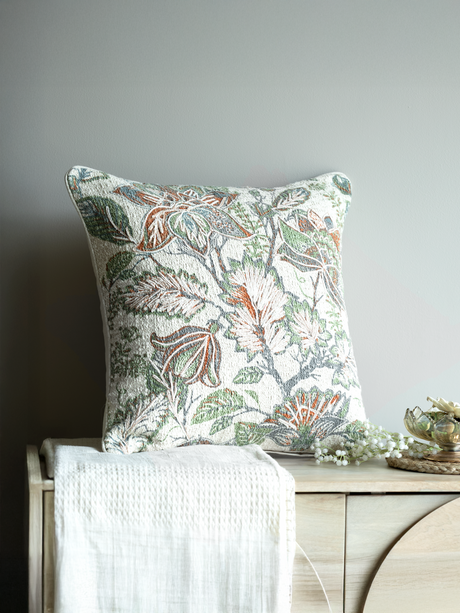
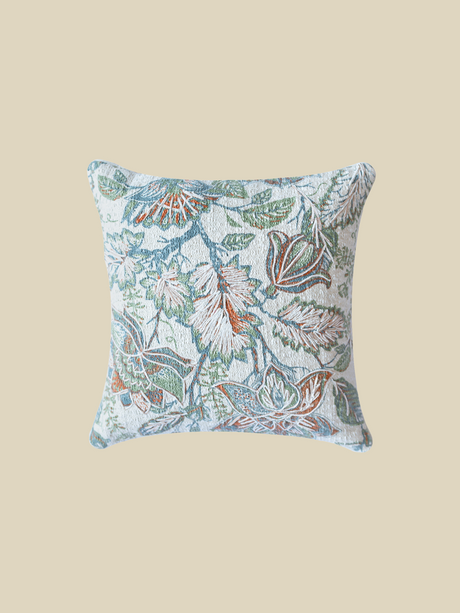
One hundred and fourteen cushions for sofa and home use across nine materials and twenty colourways. Our sofa cushion covers and couch cushion covers are built around natural fibres: 84 cotton pieces, 20 linen, and 14 velvet. Every cushion is sold as a complete piece including the cover and the insert. The range spans plain woven cotton pieces for people who want a neutral base to layer from, through to hand-woven and embroidered pieces with real surface interest.
Prices run from £19 to £34. The best sellers include the Maverik Velvet Cushion, Nora Cotton Cushion, Corin Cotton-Wool Cushion, Caelum Velvet Cushion, and the Neutral Glory Hand-woven Cushion. All 114 pieces are sofa cushion covers and cushions in one: the cover and fill are included in every product.
Cushion Materials. Cotton, Linen, Velvet and What Each One Gives You.
Material is the most important factor in how a cushion feels and holds up over time.
Cotton Cushion Covers
Cotton accounts for 84 pieces in the collection. Cotton cushion covers wash well, hold colour reliably, and suit most interior styles. The Zina Cotton-Linen range, Nora Cotton Cushion, Maris Cotton Cushion, and Kayali Black and White Cotton Cushion all demonstrate the range within cotton alone: plain woven, striped, textured. Cotton is the most practical choice for high-traffic sofas because it tolerates regular washing at 30 to 40 degrees without deteriorating. Good quality cotton cushions built to last considerably longer than synthetic alternatives.
Linen Cushions UK
Twenty linen pieces in the collection. Linen cushions UK have a more structured, textured feel than cotton. Slightly stiffer initially, linen softens with every wash and the natural surface variation gives each piece a subtly unique look. Linen suits minimal, Scandinavian, or natural material interiors. It is the best choice for anyone who wants a cushion that looks more considered over time rather than less. The Orson Cotton-Linen and Miran Cotton-Linen are the strongest linen options in the current range.
Velvet Cushions
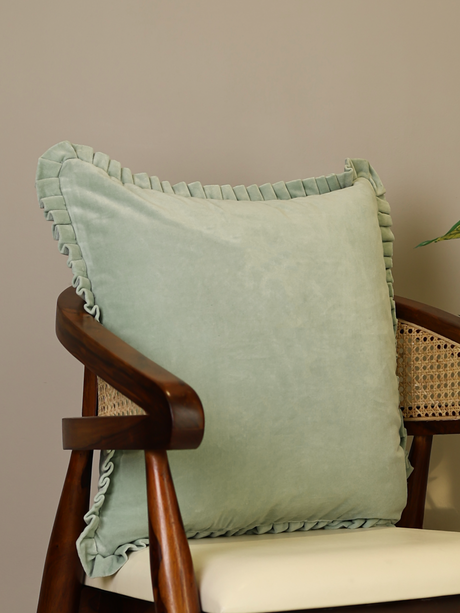
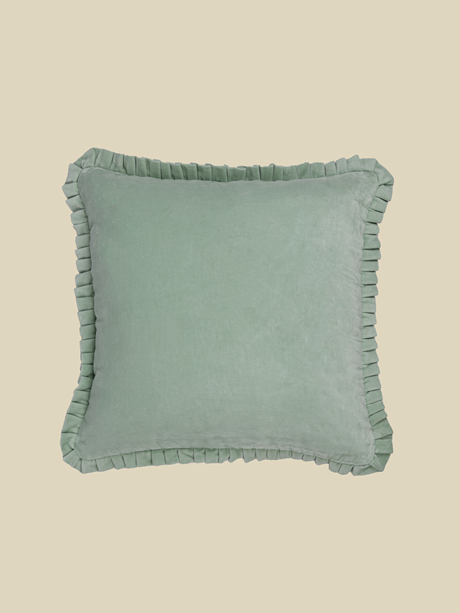
Velvet cushions are fourteen pieces in the collection and the highest-margin visual choice in the range. Velvet adds a depth of colour that flat-woven fabrics cannot match: the pile reflects light differently at different angles, making a velvet cushion look different at different times of day. The Maverik Velvet Cushion, Caelum Velvet Cushion, Cyrus Velvet Cushion, and Maple Velvet Cushion are all current pieces. Velvet cushions UK from Fableroom start at £22, considerably below the £50 to £90 that comparable velvet cushions sell for in high-street homeware retailers.
Blue velvet cushions are the most-searched specific velvet option in the data. The Caelum and Maverik both have blue options. Velvet needs a soft brush for maintenance rather than machine washing for most pieces.
Other Materials
Suede (4 pieces), viscose (3), chenille (2), leather (2), and jute (1) complete the range. Suede adds a premium matte finish. Leather suits high-traffic spaces because it wipes clean easily. Chenille is plush and warm. Each has specific care requirements noted on individual product pages.
Sofa Cushion Colours. What Works and What Does Not.
Twenty colourways across 114 pieces. Here is how to think about the main clusters.
Neutrals: Off-White, Beige, Cream, and Ivory
Off-white is the dominant colour with 41 products and the most versatile starting point for any sofa. Beige follows with 28 pieces, cream with 11, and ivory with 4. These are not interchangeable: off-white is the coolest tone and sits closest to white; beige is warmer and earthier; cream sits in between; ivory carries a subtle yellow warmth.
Beige cushions are the single most versatile choice in the range. A beige cushion reads as deliberate on almost any sofa. Cream cushions for sofa use add warmth and suit rooms that lean warm-toned. Neutral cushions in off-white and ivory are the right base layer if you want to introduce colour through other pieces.
Greens, Blues, and Statement Colours
Green cushions at 9,900 monthly searches are the highest-volume colour in the KW data and one of the strongest design directions of the past two years. The collection has 25 green pieces covering olive green cushions, sage, and forest tones. The Zina Cotton-Linen Olive Green and Corin Cotton-Wool Cushion are the standout pieces. Olive green works across natural material interiors: linen sofas, rattan chairs, oak furniture, jute rugs.
Blue cushions with 23 products are the second-largest colour cluster. Dark blues pair with warm wood and neutral upholstery; lighter blues suit white and off-white rooms. Blue velvet cushions bring the most visual richness in this colour. The Nautica Cotton Indigo is the key non-velvet blue piece.
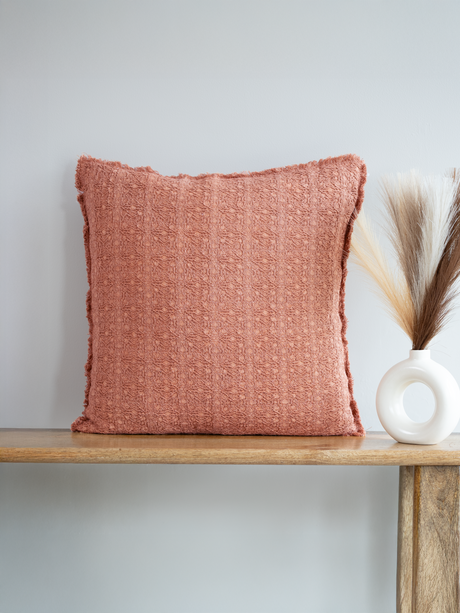
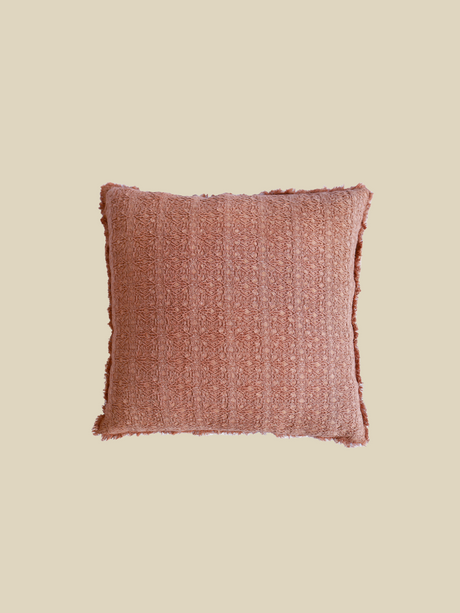
Yellow cushions (5 pieces) and coral add warmth and energy. Black and white cushions (3,600 monthly searches) are covered through the Kayali Cotton Cushion and several striped and embroidered cushions in the range. Terracotta cushions and coral suit earthy, Mediterranean palettes. Yellow (5 pieces), green-patterned, and striped cushions complete the more characterful end of the range.
What Cushions Work Best on a Grey Sofa?
One of the most common cushion questions, and one that deserves a direct answer.
Cushions on a grey sofa work best when they introduce warmth, texture, or contrast that grey itself lacks. Grey is a cool, receding tone. The colours that work most reliably against it are warm neutrals (beige, cream, terracotta, rust), deep tones (forest green, navy, burgundy), and warm whites rather than cool whites.
Beige cushions and cream tones are the most reliable warm neutral choices for a grey sofa. A practical starting arrangement for cushions grey sofa: two to three beige or cream pieces as the base, one or two in a deeper tone such as olive green or rust, and one textured or embroidered piece to stop the arrangement reading as flat. The Corin Cotton-Wool Cushion, Zina Cotton-Linen Olive Green, and any of the beige-range pieces in the Fableroom collection suit a grey sofa well.
For a dark grey or charcoal sofa, more contrast is available. Off-white, ivory, and cream all read as warm and bright against a dark background. Terracotta and rust add the most warmth. Deep green and burgundy read as rich and considered.
Cushions for Cream and Beige Sofas. What Colours and Materials Work?
Cream and beige sofas are warm-toned, which means the cushion strategy is different from a grey sofa. The goal is contrast and texture rather than warmth, since the sofa is already bringing the warmth.
For cushions on cream sofa settings: deeper tones work well as contrast. Forest green, navy, rust, and terracotta all stand out clearly against a cream background without clashing. Earthy tones such as warm brown and ochre blend rather than contrast. If you want a layered look, use two to three off-white or ivory cushions as the base and bring in one or two deeper colour pieces.
For cushions for a beige sofa: the same principle applies with slightly more tonal flexibility. Beige sofas tolerate more colour combinations because the warm base tone connects easily with both warm and cool-toned cushions. Green is the strongest performer here. Olive green on a beige sofa is consistently the most visually resolved combination in the neutral-sofa segment. Blue also works well, particularly dusty or mid-toned blues rather than bright or navy.
Beige sofa cushions from Fableroom to consider: the Corin Cotton-Wool Cushion in green, the Zina Cotton-Linen range in olive or blue, and the Nora Cotton Cushion in off-white as a base piece.
Cushion Sizes. How to Get the Sizing Right.
Getting size right matters as much as colour or material. An undersized cushion on a large sofa looks lost. An oversized cushion on an armchair looks swamped.
45x45cm cushions. The most common size for standard UK sofas. Works on most two and three-seater sofas and armchairs. A well-proportioned starting point if you are unsure.
50x50 cushion covers. The most-searched size in the data at 4,400 monthly searches and the standard size for most UK sofas. A 50cm cushion on a 55cm insert gives a fuller, better-looking result than a precise match. Most pieces in the Fableroom collection are 50x50cm.
65x65 cushion covers. Better suited to large, deep-seated sofas and sectionals. A 65x65 cushion on a standard-depth sofa can look disproportionately heavy. Check individual product dimensions before ordering. Search term '65 x 65 cushion covers' returns 880 monthly searches.
A useful rule that applies to all sizes: the insert should be 5cm larger than the cover. A 50cm cover on a 55cm insert produces a well-filled, naturally plump cushion. A precisely matched insert produces a slightly deflated result that no amount of plumping fully resolves.
How to Style Sofa Cushions. Practical Principles That Actually Work.
Cushion styling looks effortless when it is done well. Three principles that make the difference:
- Odd numbers read as intentional. Three cushions almost always look more considered than two or four. Five on a large sofa. Avoid even numbers unless you are deliberately going for a formal, symmetrical look.
- Vary scale and texture. A larger, plainer cotton cushion paired with a smaller velvet or embroidered piece creates depth that matched cushions cannot. A 50cm plain cotton base next to a 45cm velvet piece is a consistently successful combination.
- Keep tones in the same family. Beige, cream, and rust together. Olive green, forest green, and yellow-green together. Mixing warm and cool tones in the same arrangement requires more skill to land well.
- Size up your insert. The most common cushion styling mistake. A beautiful cover on an underweight insert looks deflated. 5cm larger insert than cover, always.
- Do not over-accessorise. Six cushions on a two-seater is too many. The cushions should complement the sofa, not replace it.
Good Quality Cushions at a Fair Price. What That Actually Means.
When people search for good quality cushions or quality cushions in the UK, they are asking a reasonable question: how much do I need to spend to get something that lasts, feels right, and does not look tired after six months?
The honest answer is that price and quality are not always correlated in the cushion market. High-street retailers selling at £40 to £70 per cushion often source from the same factories as budget retailers, with the margin built into the brand name rather than the material or the making. What you actually need to look at is the fibre content, the construction method, and whether the supply chain is something the retailer will tell you about.
At Fableroom, our luxury cushions and everyday cotton pieces are all made in certified artisan workshops in India, using natural fibres, and priced without the retail markup. The Maverik Velvet Cushion is £33. A comparable designer cushions UK velvet piece from a high-street homeware retailer typically sells for £55 to £90. That is not because ours is lower quality. It is because we buy directly from the maker, cut out two layers of distribution cost, and pass the saving to you.
Affordable luxury cushions is not a contradiction. It is a sourcing decision. Natural fibres, skilled making, best quality cushions built to last, at a price that reflects the craft rather than the channel. That is what this collection is.
Why Buy Cushions From Fableroom?
The UK cushion market is saturated. Most of what is on the high street and on third-party platforms comes from the same factories at prices that reflect a retail margin rather than the quality of the making.
Fableroom sources directly from artisan workshops in India, makers who have worked with natural textiles for generations. We buy directly from them, no middlemen, no wholesale layers, no retail margin added on top. That is why our cushions range from £19 to £34 rather than the £45 to £90 that comparable pieces sell for elsewhere. The difference is the channel, not the quality.
Natural fibres throughout. Cotton (84 pieces), linen (20), wool-blend, velvet. No cheap synthetic-dominant fabrics built for one season.
Handcrafted and hand-woven. The Neutral Glory Hand-woven Cushion and Omio Hand-woven Cushion use traditional loom techniques. The embroidered pieces are individually embroidered, not printed. The difference is visible in the surface and in the durability.
Direct from certified makers, no middleman. All Fableroom cushions are sourced from workshops certified under GoodWeave, Sedex, and SMETA. No middlemen, no importers, no wholesale layer. Independent standards that verify fair wages, safe conditions, and ethical production. Not a footnote.
Blue sofa cushions and velvet options. Blue is one of the strongest sofa colours in the range. The Nautica Cotton Indigo and Caelum Velvet Cushion are the two standout pieces for sofa use.
Fairly priced and built to last. A well-made natural fibre cushion lasts three to five years with proper care. A budget synthetic cushion typically needs replacing within eighteen months. Buying well once costs less over time.
Thoughtfully Made. Fairly Priced. Direct from the maker to your home.
Cushion and Cushion Cover FAQs
Questions people ask regularly, answered properly.
- What are the best cushions for a sofa in the UK?
The best sofa cushions balance material, size, and colour for the sofa and room they will sit in. For durability and washability, cotton or cotton-linen blend cushions at 45 to 50cm are the most practical choice. For a more premium look, velvet cushions in a complementary colour add depth that flat-woven fabrics cannot match. From the Fableroom range, the Nora Cotton Cushion, Corin Cotton-Wool Cushion, and Maverik Velvet Cushion are the strongest all-round sofa cushions. All are made in certified workshops in India and priced from £19.
- Are Fableroom cushions good quality for the price?
Yes. Every cushion in the Fableroom collection uses natural fibres: cotton, linen, wool-blend, or velvet. None are synthetic-dominant. The low price relative to high-street alternatives reflects the direct sourcing model, not a reduction in material quality or construction standard. Velvet cushions start at £22, comparable pieces from UK homeware retailers sell for £55 to £90. Cotton cushions start at £19. Independent certifications under GoodWeave, Sedex, and SMETA verify the workshops and conditions behind every piece.
- What is the best material for cushion covers?
For everyday use, cotton is the best material for cushion covers. It washes reliably, holds colour well, and suits most interior styles. Linen is the better choice for a more textured, natural aesthetic: it softens beautifully over time and suits minimal or Scandinavian interiors. Velvet is the premium choice for visual depth and warmth of tone but requires more careful maintenance. Avoid polyester-dominant blends for sofa use as they tend to pill and lose shape faster than natural fibre alternatives.
- What size cushion covers do I need?
For most standard UK sofas, 50x50cm is the right size and the most widely available in the Fableroom collection. A useful rule: use an insert 5cm larger than the cover for the fullest result. A 50cm cover on a 55cm insert produces a well-filled, naturally plump cushion rather than a flat one. For large or deep-seated sofas, 65x65cm gives better proportion. For armchairs, 45x45cm works well without overwhelming the frame.
- What cushions look best on a grey sofa?
On a grey sofa, the most effective cushions introduce warmth or contrast that grey itself lacks. Warm neutrals (beige, cream, terracotta), deep tones (forest green, navy, rust, burgundy), and warm whites all work. Cool whites and pale greys tend to disappear against grey rather than creating useful contrast. A practical starting arrangement: two to three beige or cream cushions as the base, one or two in a deeper tone such as olive green or rust, one textured piece. The Corin Cotton-Wool and Zina Cotton-Linen Olive Green suit grey sofas particularly well.
- What cushions work best on a cream or beige sofa?
Cream and beige sofas are warm-toned, so the cushion strategy is about contrast and texture rather than adding more warmth. Forest green, olive, navy, and terracotta all create clear contrast against a cream or beige background. Earthy tones such as warm brown blend rather than contrast. For a cream sofa, use off-white or ivory as a base layer and bring in one or two deeper tone pieces. For a beige sofa, olive green is the strongest single-colour choice and consistently the most visually resolved combination.
- How many cushions should I put on a three-seat sofa?
Three to five cushions on a three-seat sofa is the standard recommendation. Three reads as deliberate and clean. Five creates a more layered, lived-in look. Odd numbers almost always look more considered than even ones. For a deeply cushioned or oversized sofa, five works without crowding. For a leaner contemporary frame, three at varied sizes is usually better. Pair one larger plain cushion with two smaller textured or patterned pieces for the most consistently successful result.
- Do Fableroom cushions come with the insert included?
Yes. Every cushion at Fableroom is sold as a complete piece including both the cover and the insert. You do not need to buy them separately or source your own fill. The fill type, feather and down or hollow fibre, is noted on the individual product page so you can choose based on your preference for feel and maintenance requirements.
- What is the difference between feather and fibre cushion inserts?
Feather and down inserts have a soft, naturally plump feel that benefits from daily reshaping. They are the more luxurious choice and last longer with proper care. Hollow fibre inserts hold their shape without daily attention, are hypoallergenic, and machine-wash more readily. For high-traffic sofas or allergy-sensitive households, fibre is the more practical choice. For a relaxed, layered look, feather fill produces a more naturally settled appearance over time.
- What are lumbar cushions and do they work on a sofa?
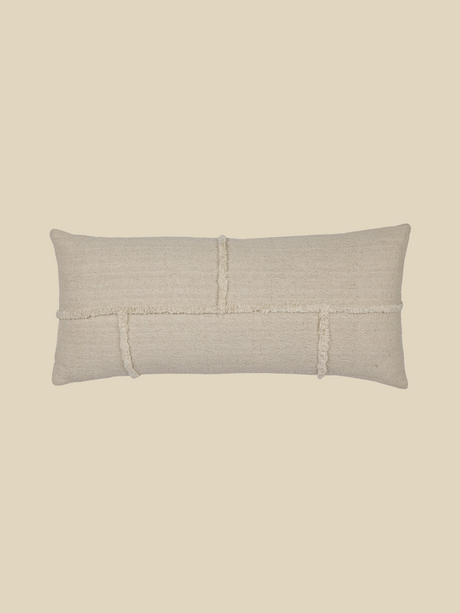
Lumbar cushions are rectangular rather than square, typically around 30x50cm or 35x55cm. They are designed to support the lower back when sitting upright, which makes them practical for sofas used for reading, working from home, or longer periods of sitting. Aesthetically, a lumbar cushion adds a different shape to a row of square cushions and can make an arrangement look more considered. Check the Fableroom collection for the current availability of rectangular cushion options.
- How do I care for velvet cushion covers?
Most velvet cushion covers should be dry-cleaned or spot-cleaned rather than machine-washed, as machine washing can flatten the pile permanently. For everyday maintenance, brush the velvet lightly in one direction with a soft clothes brush to keep the pile even and remove dust. If the pile becomes flattened from use, hold the cushion over steam briefly (a shower or kettle steam works) and brush gently in one direction while the fibres are warm. Check the individual product care label before attempting any cleaning.
- Where are Fableroom cushions made?
All Fableroom cushions are made in certified artisan workshops in India. The cotton, linen, and wool-blend pieces are woven and sewn by makers with generations of experience in natural textiles. The hand-woven pieces use traditional techniques that cannot be replicated industrially. Every workshop is certified under GoodWeave, Sedex, or SMETA standards, which verify fair wages, safe working conditions, and ethical production. We buy directly from the makers, no middlemen, no importers.
Thoughtfully Made. Fairly Priced.
Every cushion at Fableroom is made by skilled artisans in India using natural fibres and priced without the middleman markup. Direct from the maker to your home. Questions about sizing, materials, or care? Reach out at hello@fableroom.com.
Free UK delivery. Ethically made. Fairly priced.
Browse the full cushion covers and sofa cushions collection at Fableroom.


 £34
£34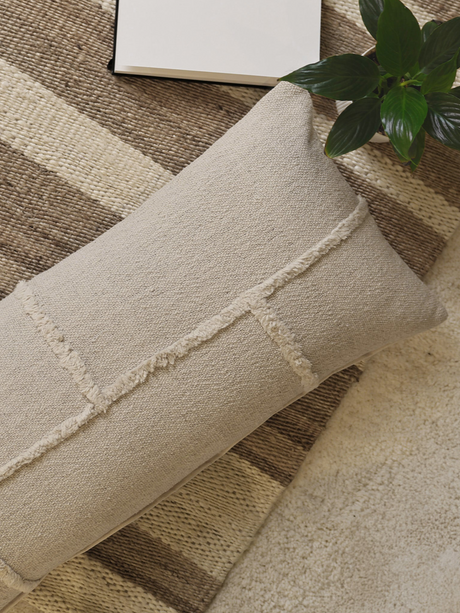


 £25
£25


 £27
£27


 £28
£28


 £61Unit price /UnavailableOther Retailers £88Express Delivery
 £61Unit price /UnavailableOther Retailers £88Express Delivery



 £24
£24