Fluted & Ribbed Furniture: Linear Texture, Considered Form
There is a distinct tactile shift happening in contemporary furniture design. For years, residential interiors were dominated by flat, ultra-minimalist surfaces, smooth planes of engineered wood, stark lacquered boards, and handleless doors that practically blended into the plasterwork. While clean, this hyper-smooth approach often left rooms feeling cold, two-dimensional, and devoid of sensory character.
Enter the renaissance of tactile depth. Modern fluted furniture and ribbed furniture have emerged as the premier response to the craving for touchable design. By introducing repetitive, precise vertical grooves into wood, metal, and glass, textured furniture bridges the gap between mid-century architectural geometry and a warm, inviting residential atmosphere.
At FableRoom, our fluted and ribbed storage furniture collection honours this intersection of form and texture. We focus on handcrafted pieces that use linear detailing not just as a superficial decoration, but as a deliberate architectural element that anchors a room, catches shifting natural light throughout the day, and delivers high-end luxury at honest, uninflated prices.
Understanding the Profile: Fluted vs. Ribbed Furniture
While the terms are frequently used interchangeably in interior design conversations, "fluted" and "ribbed" actually refer to opposing geometric treatments of a surface. Understanding the structural difference is essential when selecting contemporary furniture design pieces to complement your existing interior architecture.
- Fluted Furniture: A fluted profile consists of a series of concave, rounded grooves carved into the material. Think of the classical architecture of Greek columns; the channels scoop inward, creating subtle, soft shadows. Fluted wood furniture offers a gentler interplay of light, as the curved depressions diffuse reflections smoothly across the facade.
- Ribbed Furniture: A ribbed profile is the inverted counterpart. It features convex, raised linear ridges that project outward from the base surface. Ribbed cabinet furniture typically exhibits sharper, more defined ridges that cast stronger, higher-contrast shadows. This creates an energetic, highly graphic rhythm that makes a bold visual statement.
Both profiles achieve the same fundamental objective: breaking up the flat monotony of a cabinet or sideboard door. The choice between them comes down to whether you prefer the softer, classical elegance of flutes or the crisp, architectural punch of ribs.
Why Textured Surfaces Elevate the Modern Home
The primary challenge of a neutral or minimalist colour palette is preventing the space from looking flat or sterile. When walls, rugs, and sofas all share similar cream, beige, or grey tones, the room relies entirely on texture to create visual hierarchy and dimension.
The Physics of Light and Shadow
Luxury fluted furniture behaves like a canvas for the room's ambient lighting. As daylight moves through a space, the vertical grooves trap light on one side and cast delicate shadows on the other. A flat oak sideboard looks identical at 9:00 AM and 5:00 PM; a fluted sideboard, by contrast, transforms dynamically across the day. This architectural movement gives the furniture an evolutionary presence in your home.
Visually Elongating Spatial Proportions
Just as vertical stripes in clothing create the illusion of height, the repeating vertical lines of fluted storage furniture trick the eye into drawing upward. Placing a long, low ribbed sideboard in a room with standard ceiling heights subtly elongates the wall, making the entire space feel more expansive and airy. It provides substantial storage capacity without looking like a bulky, space-consuming box.
Concealing Daily Wear and Tear
On a purely practical level, textured furniture is incredibly forgiving in everyday living environments. High-gloss or entirely flat surfaces easily show up smudges, fingerprints, dust, and minor surface micro-scratches. The repeating peaks and valleys of a ribbed cabinet break up light reflections so effectively that superficial imperfections vanish, making it a brilliant option for busy family spaces and hallways.
Materiality Matters: Wood, Metallic Accents, and Engineered Precision
The success of any fluted or ribbed piece relies entirely on the precision of its construction and the quality of its underlying materials. When mass-manufacturing operations attempt to replicate this trend cheaply, they often resort to thin plastic wraps or low-density fiberboards that peel, warp, or display rough, fuzzy edges within the grooves.
At FableRoom, our pieces are cut and finished with exact craftsmanship to ensure every groove remains structurally sharp and smooth to the touch.
- Fluted Wood Furniture: The ultimate luxury option. Utilizing premium timbers like oak, walnut, or stained ash allows the natural, organic grain pattern of the wood to run continuously across the vertical crests and troughs. This creates an exquisite tension between strict geometric symmetry and natural, flowing chaos.
- The Mixed-Material Approach: To ground the warmth of timber, contemporary furniture design frequently pairs ribbed faces with contrasting structures. Slim industrial iron bases, slender brass legs, and brushed steel handles introduce a jewel-like quality that balances the substantial weight of the storage cabinetry.
A Comprehensive Styling and Placement Guide
Integrating textured statement pieces into your home requires an eye for balance. Because fluted and ribbed pieces carry a strong graphic identity, they should be styled with a ‘less is more’ philosophy to let the craftsmanship take center stage.
The Living Room: Fluted Sideboards as Media Hubs
A large fluted sideboard is an exceptional foundation for a living room media wall. Positioned beneath a wall-mounted television, the linear slats disguise the seams of cabinet doors, creating a unbroken architectural feature wall that easily hides media boxes, gaming consoles, and messy wiring.
- Styling Tip: Contrast the verticality of the cabinet with smooth, rounded sculptural decor on top. A perfectly spherical ceramic bowl, a wide circular mirror, or a low-slung asymmetrical glass vase will break up the repeating vertical lines beautifully.
The Dining Room: Elegant Ribbed Storage Cabinetry
In a dining space, a tall ribbed cabinet furniture piece provides a dramatic backdrop for hosting. It serves as an elegant bar cabinet or crockery display while infusing the room with high-end boutique hotel energy.
- Styling Tip: Lean into the architectural rhythm by keeping table linens soft and organic. Pair your cabinet with a washed linen tablecloth or a woven boucle dining chair to play up the rich contrast between soft textiles and hard, structured woodwork.
The Entryway: Creating a Tonal First Impression
Hallways are notoriously tricky to style because they are narrow, heavily trafficked, and often lacking in natural light. A shallow modern fluted furniture console table or small cabinet creates a striking architectural statement immediately upon opening the front door, without requiring a wide footprint.
Quick-Reference Guide: Choosing Your Ribbed Look
Use this quick guide to choose the right ribbed or fluted furniture profile for your space, based on the room architecture, mood and finish.
Fluted sideboards work best against low, sprawling walls, or placed under large windows and TVs. They create a harmonious, calm and grounding effect, especially in natural oak, stained black ash or designs finished with brass feet.
Ribbed cabinets are better suited to rooms with high ceilings, narrow alcoves or tight dining corners. Their vertical texture feels bold, graphic and architectural, particularly in deep charcoal, walnut veneers or pieces with iron bases.
Fluted consoles are ideal for entryway halls or behind floating, open-back sofas. They bring an airy, light and sophisticated feel to the space, especially in off-white lacquers, pale ash or designs with slim metal legs.
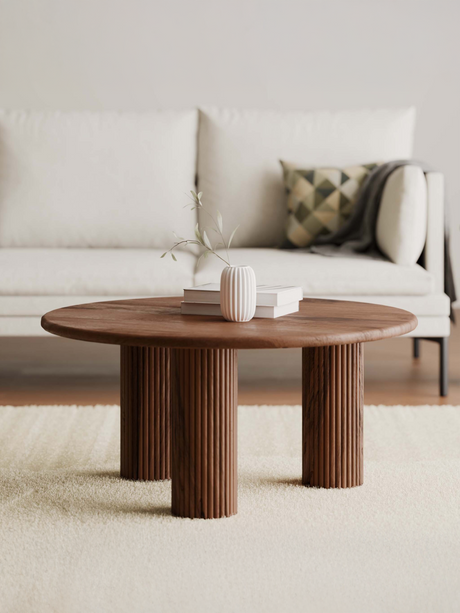
Textured side tables work well beside plush fabric sofas or rich velvet armchairs. They add a tactile, layered and curated mood, with travertine bases or curved oak fluted drums bringing extra depth and material interest.
To help navigate our collection and determine which profile and tone align with your spatial goals, consult the style matrix below:
The FableRoom Difference
High-street design brands frequently add steep retail markups to textured furniture under the guise of it being a specialized luxury style. At FableRoom, we bypass the traditional middlemen and design supply loops. By working closely with dedicated craftspeople and managing our own distribution, we deliver premium, heavy-weight fluted storage furniture typically 30% to 50% below standard UK retail prices.
We don't cut corners on the depth of the grooves, the weight of the frames, or the durability of the hardware. Every piece is built to hold its own for years to come.
FAQs
- What is the difference between fluted and ribbed?
Fluting consists of concave, rounded grooves that scoop inward into a surface, creating soft and subtle shadows. In contrast, ribbing features convex ridges that protrude outward, creating a sharper, more high-contrast linear texture.
- What design style is fluted?
Fluting bridges multiple design movements, heavily anchoring Art Deco, Mid-Century Modern, and upscale Contemporary styles. It balances the structural geometry of minimalism with a warm, upscale tactile finish.
- What does fluted look like?
Fluted surfaces look like a continuous wave of vertical, scalloped channels carved cleanly into a material. It resembles a classical column or a repeating sequence of elegant, inverted troughs that catch shifting light.
- How do I choose between a fluted surface and a ribbed surface?
If your home features organic shapes, soft arches, and relaxed textiles (like boucle or linen), the concave curves of fluted furniture will complement that softness beautifully. If your space features sharp angles, crisp modern art, and industrial elements, the bold, structural ridges of ribbed furniture will emphasize that graphic look.
- Can I mix fluted furniture with other types of wood in the same room?
Yes, mixing textures is highly recommended to keep a room from looking like a showroom set. If you have a smooth walnut dining table, pairing it with an oak or matte black fluted sideboard creates an intentional, curated design contrast.




 £465
£465


 £190
£190
 Sold out